
Policy Empowerment, Anchoring New Development Coordinates
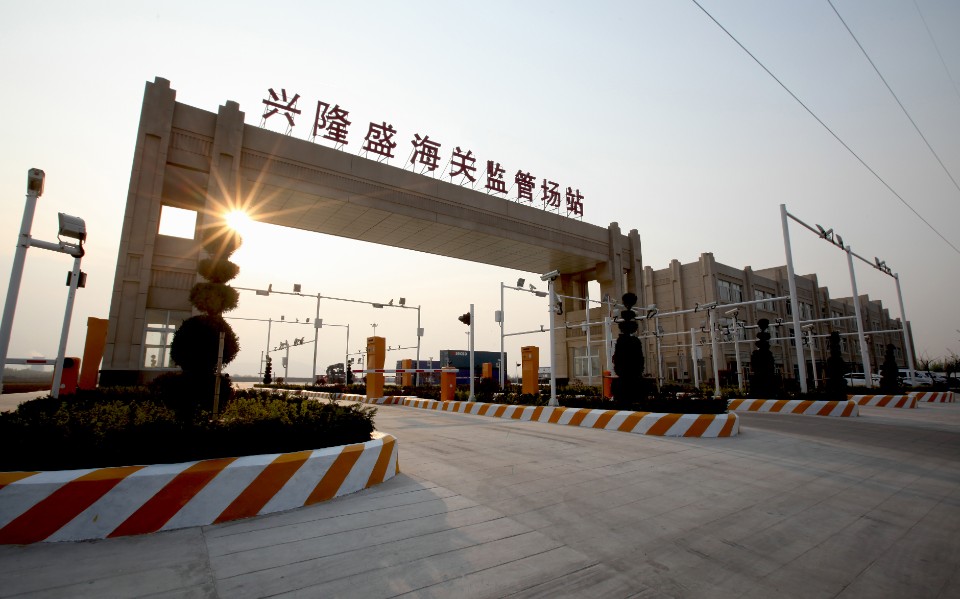
By 2025, the state has intensively issued policy documents such as the "Action Plan for Effectively Reducing Logistics Costs across Society" and the "Special Action Plan for Accelerating the Development of Digital and Intelligent Supply Chains," clearly defining the development path of digitalization, standardization, and greening in the logistics industry, and setting the goal of reducing the ratio of total social logistics costs to GDP to 13.5% by 2027. Guided by this policy tailwind, Xinglongsheng Logistics has accurately seized development opportunities, aligning the company's strategy closely with industry orientation: in terms of digital transformation, it responds to the pilot policy requirements for open and interconnected logistics data, continuously optimizes the network freight platform functions, breaks information barriers, and achieves data collaboration across the entire logistics chain; in terms of cross-border logistics, it strengthens the one-stop import-export service capabilities in Huangdao and actively connects to the "Belt and Road" cross-border transport channels; in terms of green development, it explores the application of recyclable packaging and the deployment of new energy transport equipment, fulfilling corporate social responsibility.
Technology-Driven, Activating a New Efficiency Engine
Digitalization is the core secret to cost reduction and efficiency enhancement in the logistics industry. Xinglongsheng Logistics understands this well, taking technological innovation as its core competence and building a smart logistics system of "online platform – offline hub." The company's network freight platform has undergone iterative upgrades, achieving full-process digital services including real-time freight tracking, intelligent capacity matching, automated quotations, and online payment settlement. By optimizing transport routes through big data algorithms, it effectively reduces empty mileage, saving logistics costs for customers while significantly improving transport timeliness. This model resonates with the concept of "smart logistics digital network" construction by leading industry enterprises. As shown in the application practice of China Logistics Group's "Liuyun" large model, digital tools are reshaping the efficiency boundaries of logistics services.
Looking to the future, the company will further deepen technology empowerment: accelerate the construction of inland port functions, promote the implementation of the 'double-trailer train' pilot, and optimize multimodal transport resource allocation; upgrade the platform's data analysis capabilities to provide customers with customized supply chain solutions, achieving a transformation from a "logistics service provider" to a "supply chain integrator"; explore the deep application of AI in warehouse management and intelligent scheduling, creating intelligent scenarios such as unmanned warehouses and automated loading and unloading, making technological innovation an "accelerator" for cost reduction and efficiency improvement.
Customer Service Hotline:
Address: No. 777 Zhaojin Road, Zhaoyuan City, Yantai, Shandong Province

 鲁公网安备37068502000393号
  Return to List